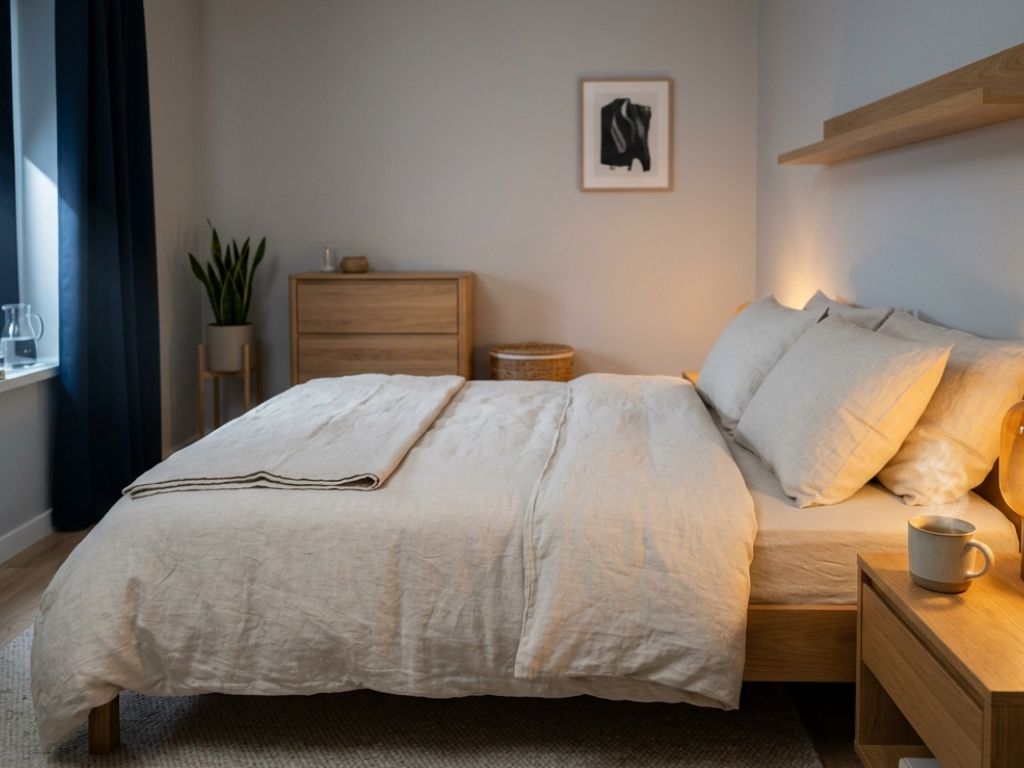
Sleep advice is everywhere, but most of it recycles the same tired points without much depth. Nourished Life’s recent piece on sleep optimisation stands out because it gets the fundamentals right: darkness, caffeine timing, nutrition, stress management, and movement. These five pillars line up with what sleep researchers have been saying for years.
Still, there’s more to unpack.
Darkness Matters More Than You Think
The trend nails the basics: a dark room and morning sunlight go a long way. What’s worth adding is the mechanism behind it. Melatonin production is triggered by darkness and suppressed by light, particularly blue light in the 460-480 nanometre range. This is why screens are such a problem an hour before bed.
Morning light exposure deserves equal attention. Getting sunlight within 30 to 60 minutes of waking helps anchor your circadian rhythm, which in turn makes melatonin release more consistent at night. A consistent wake time paired with morning light often does more for sleep quality than any evening ritual.
A few additions worth considering:
- Red or amber night lights disrupt sleep far less than white or blue light, useful if you need to get up during the night
- Even small amounts of light, like a phone charging light or street light through curtains, can measurably reduce melatonin output
- Blackout curtains work best paired with a consistent lights-out time, since the body responds to routine as much as darkness itself
Caffeine’s Half-Life Is Longer Than Most People Realise
The 2pm cutoff is sound advice, and the reasoning behind it deserves a bit more explanation. Caffeine has an average half-life of five to six hours, though this varies significantly between people based on genetics and liver function. That means a coffee at 2pm could still have a quarter of its caffeine active in your system at 2am.
Some people metabolise caffeine much slower due to variations in the CYP1A2 gene, which processes caffeine in the liver. For slow metabolisers, even a lunchtime coffee can interfere with sleep onset. If you’ve cut caffeine after 2pm and still struggle to fall asleep, this might be worth investigating.
Food Choices Deserve a Closer Look
The connection between diet and sleep hormones is real, and magnesium’s role in sleep maintenance is well documented. Magnesium helps regulate GABA, a neurotransmitter that calms nervous system activity, which explains why deficiency is linked to restless or interrupted sleep.
Tryptophan is worth mentioning here too. It’s the amino acid precursor to both serotonin and melatonin, and it’s found in foods like turkey, eggs, nuts, and seeds. Pairing tryptophan-containing foods with a small amount of carbohydrate can help the amino acid cross the blood-brain barrier more efficiently, which is part of why a light snack before bed sometimes helps rather than hinders sleep.
The advice to avoid heavy meals close to bedtime holds up well against the evidence. Late, large meals delay the drop in core body temperature that normally accompanies sleep onset, making it harder to fall asleep even when you feel tired.
Stress Management Techniques Worth Trying
The stress-reduction section covers useful ground, and a few evidence-backed techniques pair well with the suggestions already given.
Progressive muscle relaxation involves tensing and releasing muscle groups systematically through the body, which has been shown to reduce the time it takes to fall asleep. The 4-7-8 breathing technique, developed as a variation of pranayama breathing, involves inhaling for four seconds, holding for seven, and exhaling for eight. Some people find this more accessible than open-ended meditation, since it gives the mind a specific task.
Journalling before bed, as mentioned in the original piece, works particularly well when structured as a brain dump of tomorrow’s tasks. Writing down unfinished to-dos has been shown to reduce the time it takes to fall asleep compared with journalling about completed tasks, likely because it offloads the mental rehearsal that often keeps people awake.
Exercise Timing Matters as Much as Exercise Itself
Regular movement supporting deep sleep is well established. The recommendation to avoid exercise right before bed is generally sound, though the picture is more nuanced than a blanket rule.
Vigorous exercise raises core body temperature and stimulates the release of cortisol and adrenaline, both of which can interfere with the wind-down process if done within an hour or two of bedtime. Gentle movement like stretching or a slow walk tends not to cause the same disruption and can even help some people relax.
Morning or early afternoon exercise appears to have the strongest positive effect on sleep quality that night, partly because it reinforces the natural rise and fall of core body temperature that supports the sleep-wake cycle.
The Bigger Picture
What makes the original five tips effective isn’t any single hack. It’s the combination of light exposure, careful timing, supportive nutrition, stress reduction, and movement working together to support the body’s natural rhythms. Sleep responds better to consistency across these areas than to any one perfect intervention.
Anyone struggling with persistent sleep issues despite trying these strategies should consider speaking with a healthcare provider, since underlying conditions like sleep apnoea or restless leg syndrome won’t resolve through lifestyle changes alone.